The WRF Academy translates knowledge into practice. Building on over a decade of work delivering international projects and fora, we offer targeted training and capacity building on natural resource governance, circular economy, and sustainable value chains. Trainings can be delivered in a wide range of languages, including English, Spanish, French, German and Italian.
The WRF Academy serves professionals and organisations working across resource value chains, including:
Companies in diverse industries and of all sizes, both for- and non-profit.
Policy makers and public institutions around the world.
Applied researchers, consultants and technical experts.
International organisations, NGOs, and communities.
A selection of trainings we developed and delivered over the years.
This training programme strengthens capacities for the implementation of ISO 59014:2024 in recycling and secondary material recovery processes. The course combines theoretical and practical modules covering sustainability, traceability, responsible management, and circularity, while providing participants with the tools to apply the standard in real-world contexts. The training builds on international pilot experiences across multiple countries and sectors, including electronics and construction.
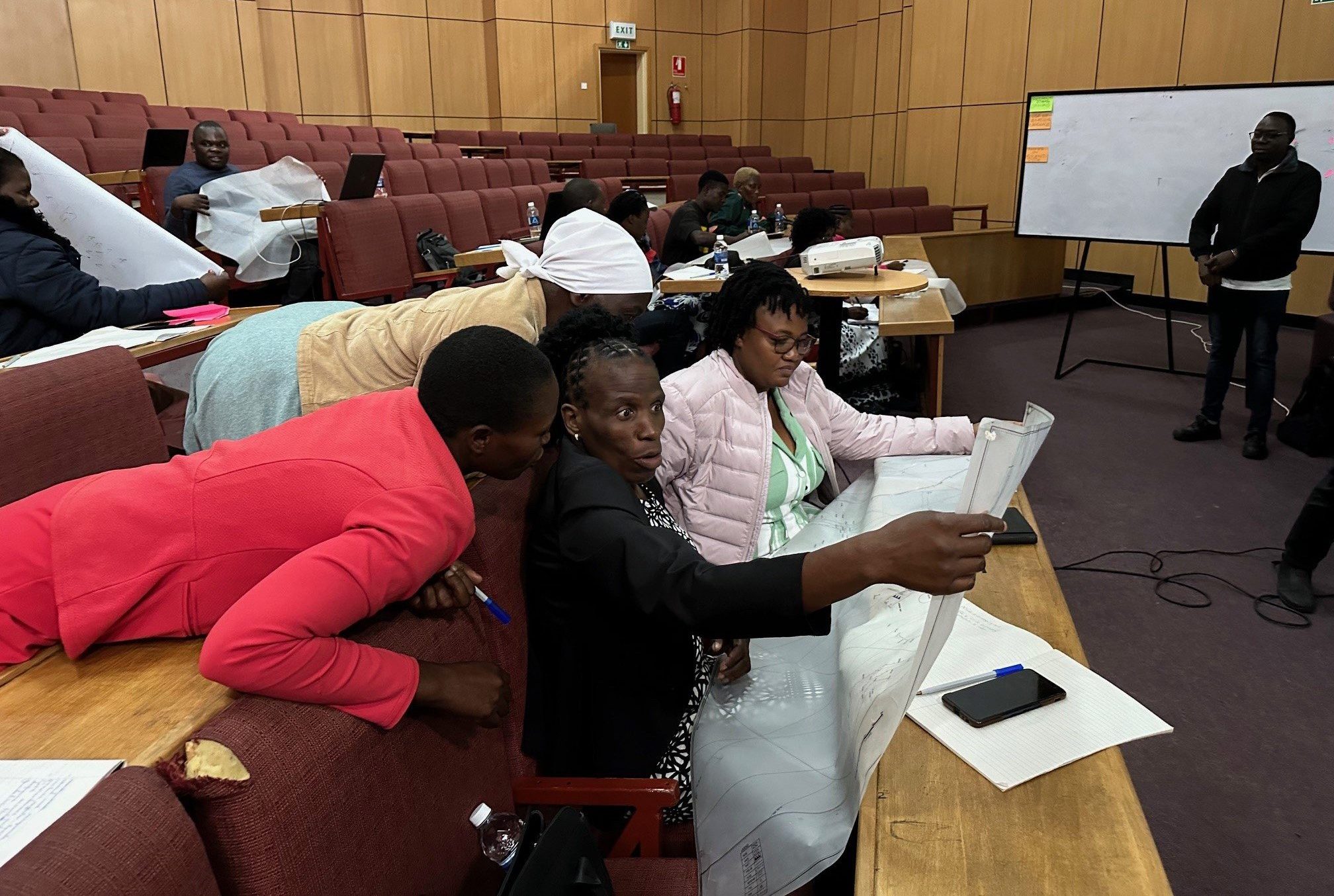
We developed a comprehensive capacity-building curriculum for artisanal and small-scale mining (ASM) communities across Africa. To date, the training has been delivered to ASM professionals in Zimbabwe, Madagascar and Zambia. The curriculum combines technical, regulatory, environmental and economic knowledge to support more sustainable and resilient mining practices.
This training builds capacity to assess the sustainability of products across their full life cycle, supporting more informed decision-making in industry and policy. It introduces key methodologies including environmental (LCA), social (S-LCA), and economic (LCC) assessment, with a strong focus on integrating these dimensions into a holistic sustainability perspective. Participants gain practical understanding of how to analyse impacts, interpret results, and communicate findings effectively to decision-makers.
This training equips professionals with practical tools to apply the ISO 59014 standard for the sustainable recovery of secondary materials within a circular economy framework. It focuses on improving resource efficiency, ensuring traceability across value chains, and integrating environmental and social considerations into recovery processes.
This training provides a comprehensive introduction to the management of electronic waste, equipping participants with the knowledge and skills to address one of the fastest-growing waste streams globally. Structured across six modules, it covers key topics including health and environmental risks, material composition, responsible dismantling, policy frameworks, and recycling systems. The course provides insights on value chain dynamics and the role of the informal sector.
This training focuses on equipping professionals in the healthcare sector with the tools to assess and improve the circular and social performance of their solutions. Participants gain practical skills to evaluate, design, and improve healthcare solutions in line with circular economy principles and social responsibility requirements.
This course introduces the principles and implementation of a systematic circular economy, with a strong focus on research, innovation, governance and policy design. Participants explore how circular economy transitions require systems thinking, multi stakeholder collaboration, and socio technical transformation across sectors and governance levels. It is designed primarily for programme owners, public authorities, and innovation managers involved in designing and implementing circular economy programmes and strategies.
This training programme strengthens capacities for the sound management of Persistent Organic Pollutants (POPs) and Polybrominated Diphenyl Ethers (PBDEs), with a focus on industrial waste, electronic waste, and end of life vehicles. The course combines theoretical and practical modules covering international agreements, the Stockholm Convention, brominated flame retardants, and the environmental and health challenges associated with hazardous substances. Participants are trained in the use of X ray fluorescence spectrometry for detecting brominated compounds, as well as in sampling techniques for plastics, soil, sediments, and water.
The WRF Academy is our capacity building platform. It provides high-quality training and knowledge services to support the sustainable and responsible management of natural resources across the entire value chain, from extraction to recycling.
The Academy transforms existing knowledge products – standards, tools, methodologies, and research – into practical learning formats for professionals and decision-makers.
We cover the full lifecycle of materials – from mining and processing to product use and end-of-life – ensuring integrated understanding and solutions.
We work at the interface of governance, industry and science. This is reflected in our training content and teaching approach.
Our courses are grounded in latest research and international standards, but designed for application in policy, business and operations.
With experience in OECD countries and the Global South, we adapt training to different regulatory, economic and operational contexts.
Our courses focus on key challenges and opportunities in sustainable resource management, spanning several sectors, methodologies and disciplines.
We offer flexible formats adapted to different needs:
Scheduled online or in-person sessions open to individual participants.
Tailored programmes for organisations, focused on specific needs.
Short, high-impact formats for decision-makers and leadership teams.
Choose a combination of online modules and live sessions.
Apply recognised methodologies and standards to structure and guide decision-making.
Evaluate environmental, social, and economic impacts across value chains, identify hotspots, and generate evidence-based insights.
Translate analysis into concrete actions, implementation plans, and operational improvements.
Interpret and communicate results effectively to decision-makers in business and policy contexts.
Trainings and curricula we have co-developed, which you can freely access online.
Our trainings are designed to combine scientific knowledge, practical experience and real-world implementation. While participants can access online courses and free learning resources, we also understand that there is no one size fits all approach when it comes to capacity building.
Organisations, institutions, and professional groups often face specific challenges, sectoral contexts, and learning needs. Whether you are looking for an introductory session, an in-depth technical training, a tailored workshop, or a longer capacity building programme, we are happy to discuss the most suitable format and content with you.
Get in touch with us to understand how our trainings can benefit your organisation and how to tailor them to your specific needs.