
An interview with Adrien Specker, Executive Director of the STEP Initiative
When STEP was founded over twenty years ago, e-waste was a relatively contained conversation — televisions, mobile phones, the occasional fridge or microwave. Today, the picture looks radically different. We spoke with Adrien Specker about the growing complexity of electronics, the limits of current systems, and how STEP is helping stakeholders navigate an increasingly fast-moving landscape.
Electronics now range from large appliances to tiny embedded devices and increasingly, they’re invisible to the people using them. How should we make sense of this growing complexity?
When STEP was founded, e-waste was quite basic in a sense — easier to track, less complex. But what we see now is an explosion of small electronics, much more complicated devices, which are also embedded in many other products. Electronics are not just one product anymore — they’re embedded in clothes, in furniture. I was even reading that there are conductors now integrated in paint. In the building sector too. This is what we actually call pervasive electronics.
What makes it more difficult is there’s no clear end-of-life path for all these new little devices. It makes it very difficult to establish take-back schemes, and to regulate, because you cannot start regulating every product and every aspect. The main challenge is a landscape that is evolving much more rapidly than regulation is adapting, and than the infrastructure is developing to manage this e-waste.
The answer is not a product-by-product logic, but more a systems perspective — understanding what materials are used, where do they go, how do they flow. At STEP, we tackle this by working with members on publications on pervasive electronics, and by bringing together different actors to discuss and find solutions together.
That invisibility has real consequences. Take single-use vapes — disposable electronics containing lithium batteries, used once and thrown away. Is enough being done about this end of the spectrum?
It is moving from a regulatory point of view, but it really depends on the region. In Europe, some countries are now regulating the use of single-use vapes. They’re a catastrophe, used only once (in some cases), produced and wasted in millions every year. And lack of awareness on what to do with them is a problem. In many countries it’s also not regulated at all. And the problem is that the infrastructure to manage them, at their end of life, is lacking. Even if you regulate collection, in some countries in Africa, how do you then treat all these lithium-ion batteries? Some countries might not even have the infrastructure to collect or treat it, even if it’s well regulated. Pervasive electronics are not only a problem because people are unaware, but the actual infrastructure is lacking in many countries.
So the infrastructure gap is just as pressing as the awareness gap. Given this dual challenge, how should stakeholders start thinking about solutions in a structured way?
What is very important is that the landscape changes a lot depending on where you are in the world — by geography, region, but also by type of device and sector. What’s important is to characterise your value chain and your problem, and to develop roadmaps specific to a sector and a region.
The material composition changes depending on sector. If you take the medical sector, electronic medical devices contain materials very different from a phone — from a contamination or quality point of view, they might need specific metals for example. That makes a big difference. At STEP, we try to address this by having regional working groups and focusing on specific sectors, because this is how we believe you can really tackle the problem.
You mentioned the importance of sector-specific approaches. Is there a sector that stands out as a model others could learn from?
The medical sector is, in fact, a useful reference point for other sectors. Regulations are extremely strict, the materials are complex, and the value chain connects very different actors. Three lessons stand out. First, traceability — the digital health sector has very good knowledge of where products flow, mostly because it’s heavily regulated. That’s something we should replicate elsewhere. This is definitely lacking with pervasive electronics. With devices sold on platforms like Temu, for instance, you have no clue where they come from or where they go. Second, systems thinking — looking at the full lifecycle of a product, not just the device. And third, collaboration between actors along the value chain. In healthcare, clinicians, engineers, regulators, procurement, and waste managers all have to work together. That needs to be replicated in other sectors.
Extended producer responsibility (EPR) schemes are often held up as the key policy tool for electronics. In practice, what do they achieve and where do they still fall short?
EPR schemes are very different depending on where you are in the world. From a European or Swiss point of view, they function very well. You can bring your fridge to a recycling point or any shop, they have to take it back. But if you go to Africa, there may be an EPR scheme in name with no strict implementation, no enforcement of the law. If you throw your fridge in the street here in Switzerland, trust me, someone will be on your back. That level of enforcement is not always there elsewhere.
It’s also really in the hands of original equipment manufacturers and producer responsibility organisations to fulfil their mandate, since they are paid to collect e-waste and raise awareness. That has to be a priority in countries where enforcement of EPR is still not good.
On the consumer side, more than financial incentives, you have to make it easy. In Switzerland, you can walk into any shop that sells electronics and just hand in your broken device and they will take it. But people probably don’t know they can do that. That’s a clear awareness issue. At STEP, we’ve decided to put the focus of our Latin American working group on awareness raising, partnering with producer responsibility organisations that have a mandate to reach the population.
You mentioned that different regions face very different realities. Rather than solutions always flowing from north to south, what can regions actually learn from each other — including from the informal sector, which rarely gets a seat at the table?
There is a potential for exchange of knowledge in both directions. Europe has very good infrastructure. But maybe what we lack here is the collection model. In many African and Latin American countries, the informal sector is crucial in collecting e-waste — it goes door to door, you can put your microwave on the street and somebody will collect it. That’s actually functioning better than what we have here in some respects. On the other hand, the excellent infrastructure in Europe can be developed and transferred to other countries.
The informal sector is not illegal or underground — it has to be accepted as part of the system. At STEP, we recognise that it should be integrated, not excluded. We also want to include more informal sector voices in our membership, specifically associations of waste pickers in South Africa, who represent thousands of workers. That is a goal for our African working group.
Beyond the structural challenges, the technology itself keeps shifting rapidly. What developments do you find particularly challenging, and where do you see opportunity?
Batteries, because more and more devices now integrate them — even devices that didn’t before, like lawnmowers and hoovers. The different chemistries, even within lithium-ion, make it very difficult to have a standardised treatment process. Storage is also a huge challenge because many of these batteries, if not properly handled, carry a risk of fire.
Data centres, because the push in AI development is driving enormous resource consumption and their lifespan is short, roughly ten years before computing power becomes obsolete. I once visited a plant that actually reprocessed data centres, replacing and upgrading some parts rather than throwing everything away. That’s a model we have to move towards much more decisively.
On the opportunity side, two areas I find particularly interesting. The first is transient electronics — designing devices so they can degrade safely in environments where they’d never normally be used. A fire detector built with materials that decompose in water, for instance, because if it ends up in water, it’s broken anyway, so why not design it to disappear safely? The second is intermittent computing — adapting computing power to renewable energy availability, so devices only run at full capacity when clean energy is on the grid. At STEP, we try to partner with universities and research institutes to explore and publish on these innovative directions.
Which raises a deeper question: urban mining is increasingly presented as a key part of the solution. How significant is its potential?
It’s a huge potential, and we definitely have to go in this direction. But the problem is that every year we consume much more than the previous year. So even if you recovered one hundred percent of critical materials through urban mining, you would still not cover all the needs. The question of reducing consumption from the start remains.
This is why design matters as much as recovery. Historically STEP was more focused on the waste end, but we want to integrate much more the discussion of design, use phase, reuse, and repair. If you design electronics to have a reduced amount of materials, be easily disassembled, easily recyclable, and repairable, you really benefit the circular economy as a whole.
Will society eventually be forced to ask where electronics are truly necessary?
I personally believe we will be limited by two things. First, resource availability. You already saw it during Covid — the car sector had big problems getting a supply of chips. And you see it now with the geopolitical situation, where some materials are not being supplied properly, limiting AI chip supply. It’s such a tense string — as soon as one material is constrained, everything has to adjust.
The second is energy consumption. All these devices consume enormous amounts of energy, and the scale at which AI energy consumption is increasing is much higher than the scale at which energy supply is growing. There’s a point where this will not function, and we will have to limit the development of some electronics.
That said, it’s also through constraint that you develop new electronics, new ways of thinking, and rethink your needs. Sufficiency — do you really need electronics everywhere? When I think that we now put conductive materials in paint, you really start asking if this is necessary.
STEP seems to be navigating all of these challenges from a unique position. How does the initiative position itself in such a fragmented landscape, and what are the priorities going forward?
STEP is not a recycler association or a producer association. It’s a platform for all actors along the value chain to come together and discuss freely on an independent platform. If you’re a recycler, you want to know how a designer or a regulator sees your problem. At STEP, you can do that.
In the shorter term, we want to expand our focus in the Global South. We recently launched an African focus group, and our Latin American group is generating a lot of interest. We also want to engage more in international policy processes, around the Basel Convention, UNEP, and the UN e-waste coalition.
In ten years, I would like STEP to still have the name and the importance that so many members already recognise — and to grow. But I would also like STEP to be much more involved along the whole value chain, including innovative product design and material research. We talk a lot about recycling and take-back, but design and material use is clearly key. I would definitely like to see STEP move much more into that space.
About STEP
Since 2004, the STEP Initiative (previously Solving the E-waste Problem) has been a global, multi-stakeholder platform bringing together producers, recyclers, researchers, governments, and international organisations to advance sustainable solutions across the entire electronics value chain. In 2025, STEP entered a new phase as Sustainable Electronics Platform under the hosting of the World Resources Forum Association (WRFA), revitalising its strategy and strengthening its role as a leading voice in circular electronics and e-waste management worldwide — with a renewed focus on expanding into the Global South, engaging in international policy processes, and broadening its scope from end-of-life management to the full product lifecycle, including design and material innovation.
Interested in learning more or becoming a member? Reach out to Adrien Specker.
This interview with Adrien Specker was conducted by Rebecca Suhner, World Resources Forum Association.
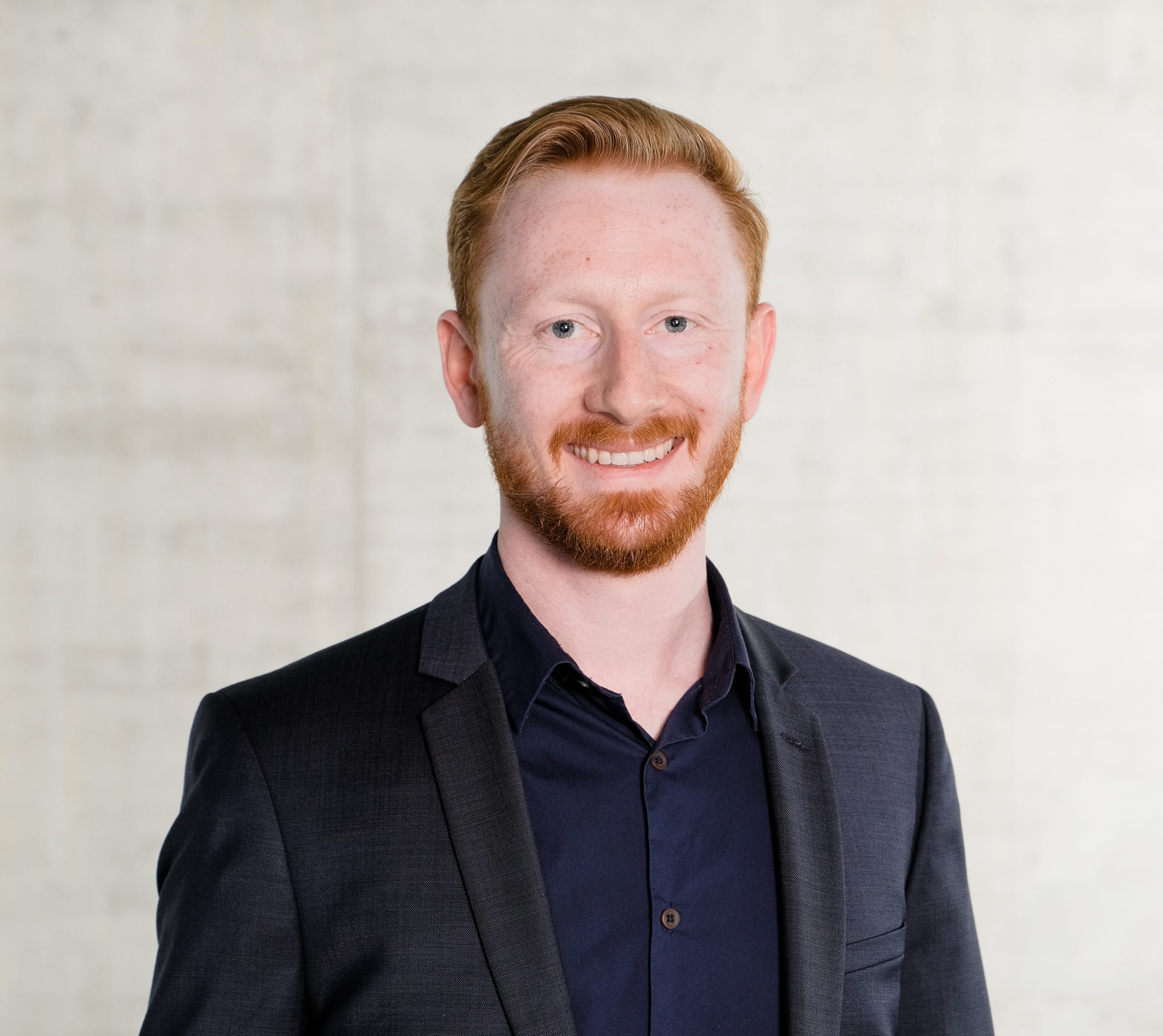
Adrien Specker
STEP & World Resources Forum

Rebecca Suhner
World Resources Forum